A Postcard from Hull
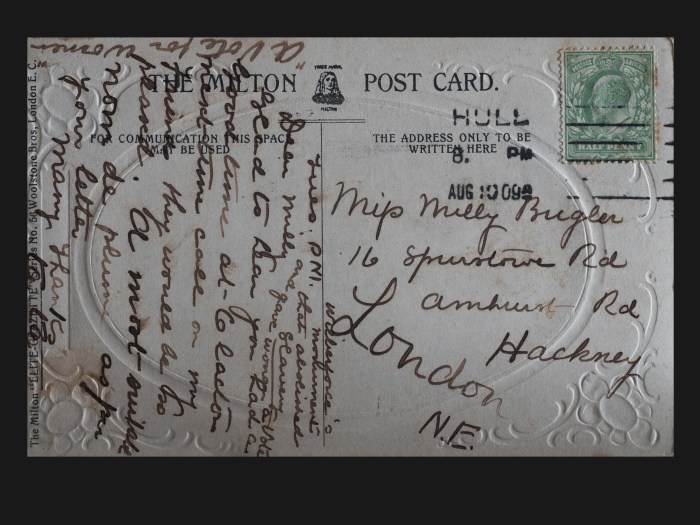
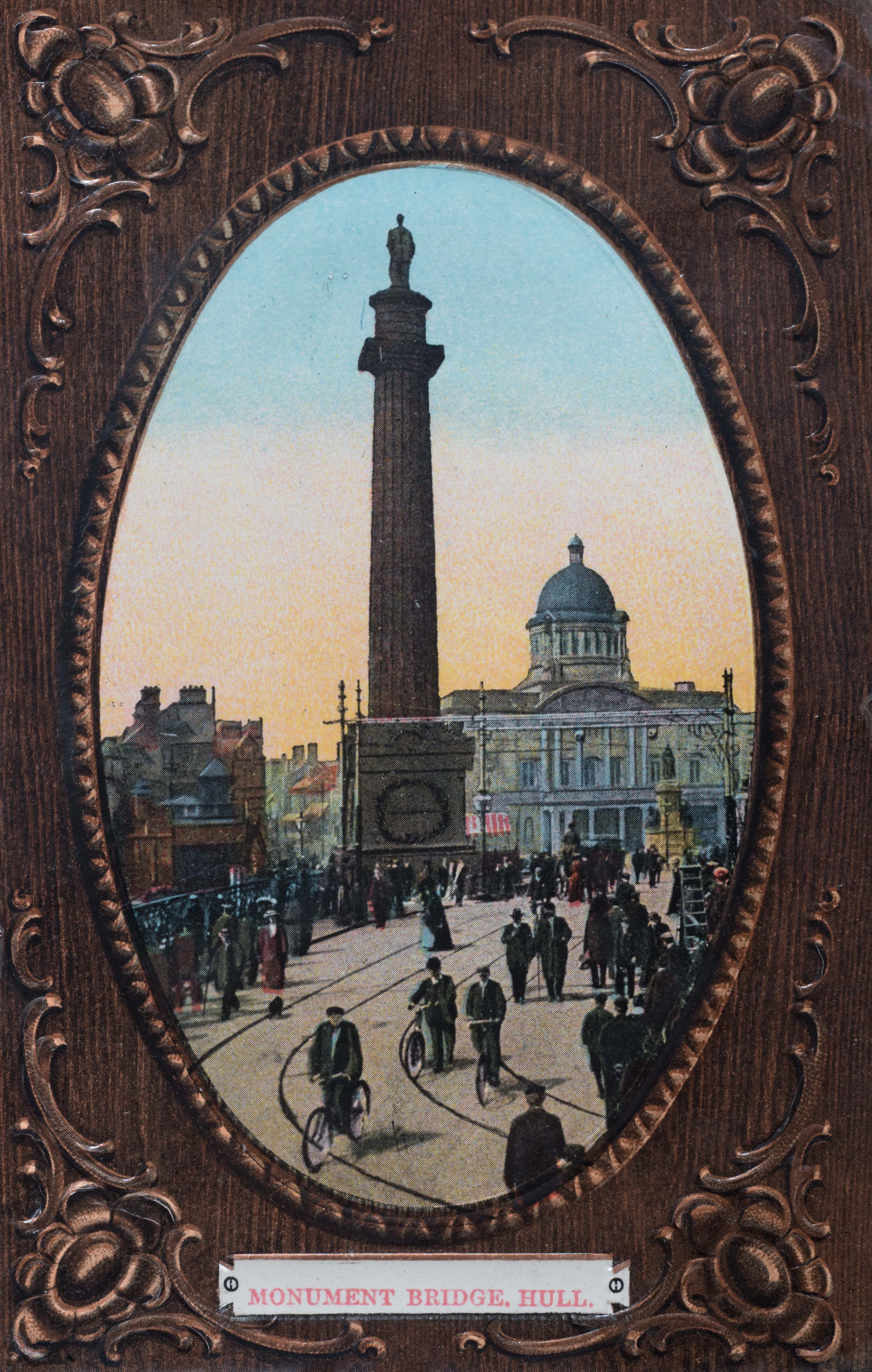
The story starts with a postcard of Monument Bridge.There are many unposted and unwritten postcards of the time, but this one looked different, a bit posh with an embossed wood effect frame and an image of the bridge with the Wilberforce monument in its original position with new City Hall and City Square in the background. It was posted on Tuesday the 10th August 1909 at 8pm.
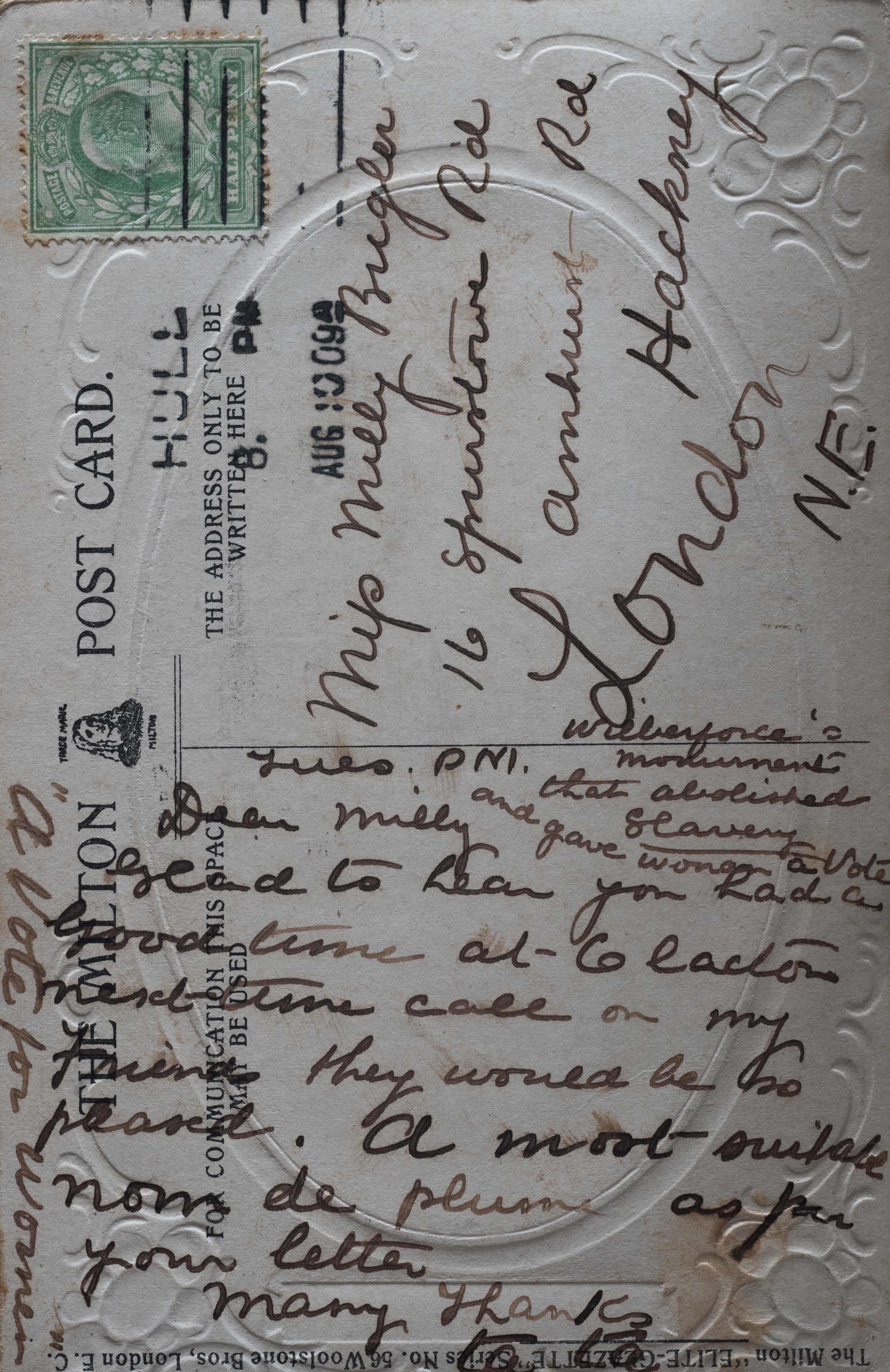
It’s adressed to Milly Bugler, 16 Spurstowe Rd, Amhurst Rd. Hackney. London N.E. and reads:
Dear Milly
Glad to hear you had a good time at Clacton, next time call on my friends they would be so pleased. A most suitable nom de plume as per your letter.
Many thanks
ta ta
Added afterwards are two additional messages fitted into the gaps left by the note: “Wilberforce’s Monument that abolished slavery and gave women a vote” and “A Vote for Women”.
A Vote for Women, the Bugler Girl and Wilberforce
Wilberforce giving women a vote was an unusual thing to say, famous for the abolition of the slave trade he was equally renowned for believing a woman’s role was submissive in serving her husband and opposed to women in politics.
We searched first for Millicent Bugler and ‘a vote for women’.
The two things that first connected were Millicent Fawcett and a poster, known as the Bugler Girl.
Millicent Fawcett was married to Henry Fawcett a Member of Parliament representing Brighton and later Hackney. In 1868 Millicent joined the London Suffrage Committee, and in 1869 spoke at the first public pro-suffrage meeting held in London. In March 1870 she spoke in Brighton, her husband’s constituency. Millicent Fawcett was elected as the president of the influential National Union of Women’s Suffrage Societies (NUWSS) in 1907, and led the organisation until 1919. Also elected as secretary in 1907 was Phillipa Strachey who’s first task was to help to organise a rally and on 9th February 1907 more than three thousand women marched from Hyde Park Corner to the Strand in support of women’s suffrage.
In 1908 a procession was organised to show Prime Minister Herbert Asquith that there was huge support for women’s suffrage. It was a mass demonstration attended by thousands of women from all over the country. The poster to advertise the NUWSS procession of 13th June 1908 became known as the Bugler Girl.
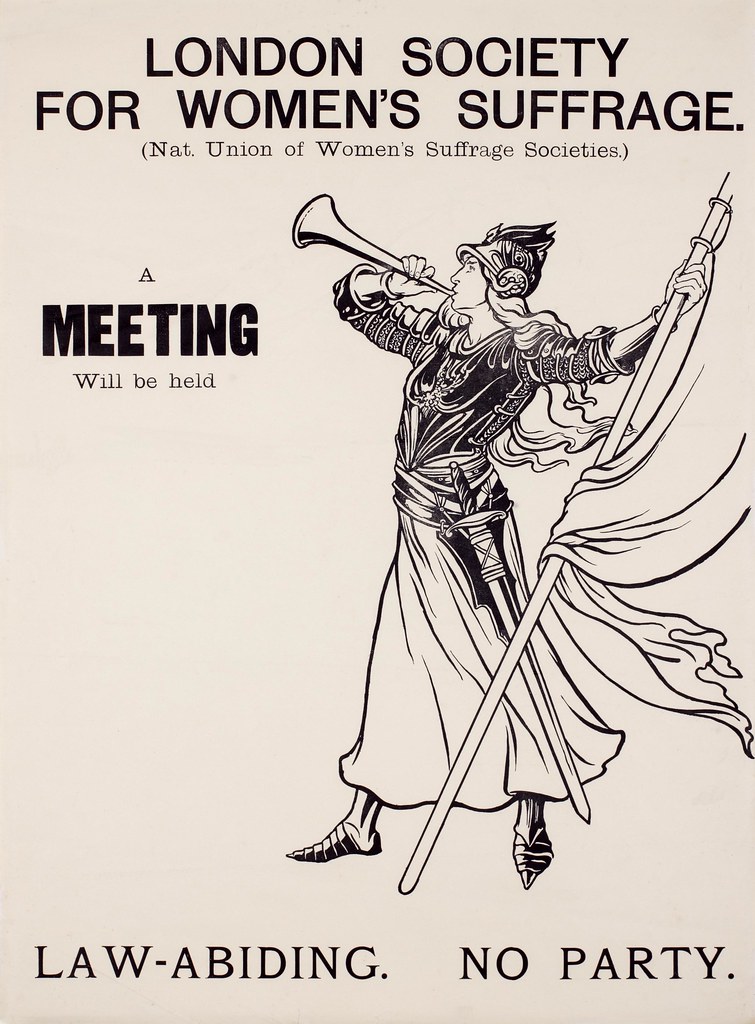
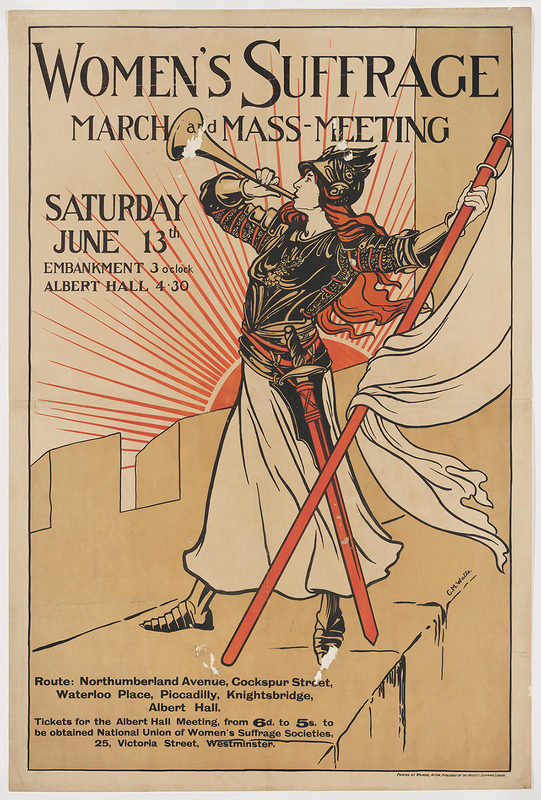
1908 Bugler Girl courtesy of the library of the London School of Economics and Political Science
This seemed like a possible connection but what about Wilberforce? Henry Fawcett was an advocate of women’s suffrage and votes for women, supporting John Stuart Mill in the first debate on votes for women in the House of Commons in 1867. At the time of the postcard the Chaplain to the Speaker of the House of Commons was the Reverend Albert Basil Orme Wilberforce, grandson of William.
In early January 1909 Philippa Strachey wrote to Basil Wilberforce asking him to speak at a meeting she was organising at the Dore Gallery on the subject: “The Girl in Business and the Vote”. The reverend replied in a letter of 28/01/1909 that he was “unable to help owing to his official position, though in favour”.
So conjecture this may be, however, there is evidence in the Library of the London School of Economics and Political Science of a Wilberforce in favour of a vote for women.
So, back to the postcard and the ‘nom de plume’ – was the postcard sent to Millicent Fawcett under the guise of ‘Milly Bugler’? Searches followed for Milly Bugler and the address. Then something unexpected came up. An entry for Mabel Hyder in the Hackney Museum and a short biography (copyright Hackney Museum).
Mabel Hyder
“Mabel Bugler was baptised at the Hackney Road Methodist Chapel, close to where her family lived at 16 Spurstowe Road. She attended Homerton College (later renamed Cavendish College Cambridge) and trained as a teacher for four years. She taught at Enfield Road School (Edith Cavell School) for nine years until she married David Hyder, a plumber, in 1908. After marriage, she focused on house duties and childcare”.
Here was Milly Bugler. Attending Homerton College open to women students with a rich history of dissenting voices and early support for the abolition of the slave trade and becoming a teacher in 1899. But the questions continue. As becoming Mildred Hyder from 1908 why was she still receiving correspondence as Milly Bugler at her home address a year later? What was Milly’s involvement in the suffragist movement? Is Milly the nom de plume used on the postcard? What of Clacton? There was certainly a strong suffragette movement in Clacton at that time. And who was the writer of the postcard? Anonymous and signing off with a simple ‘ta ta’.
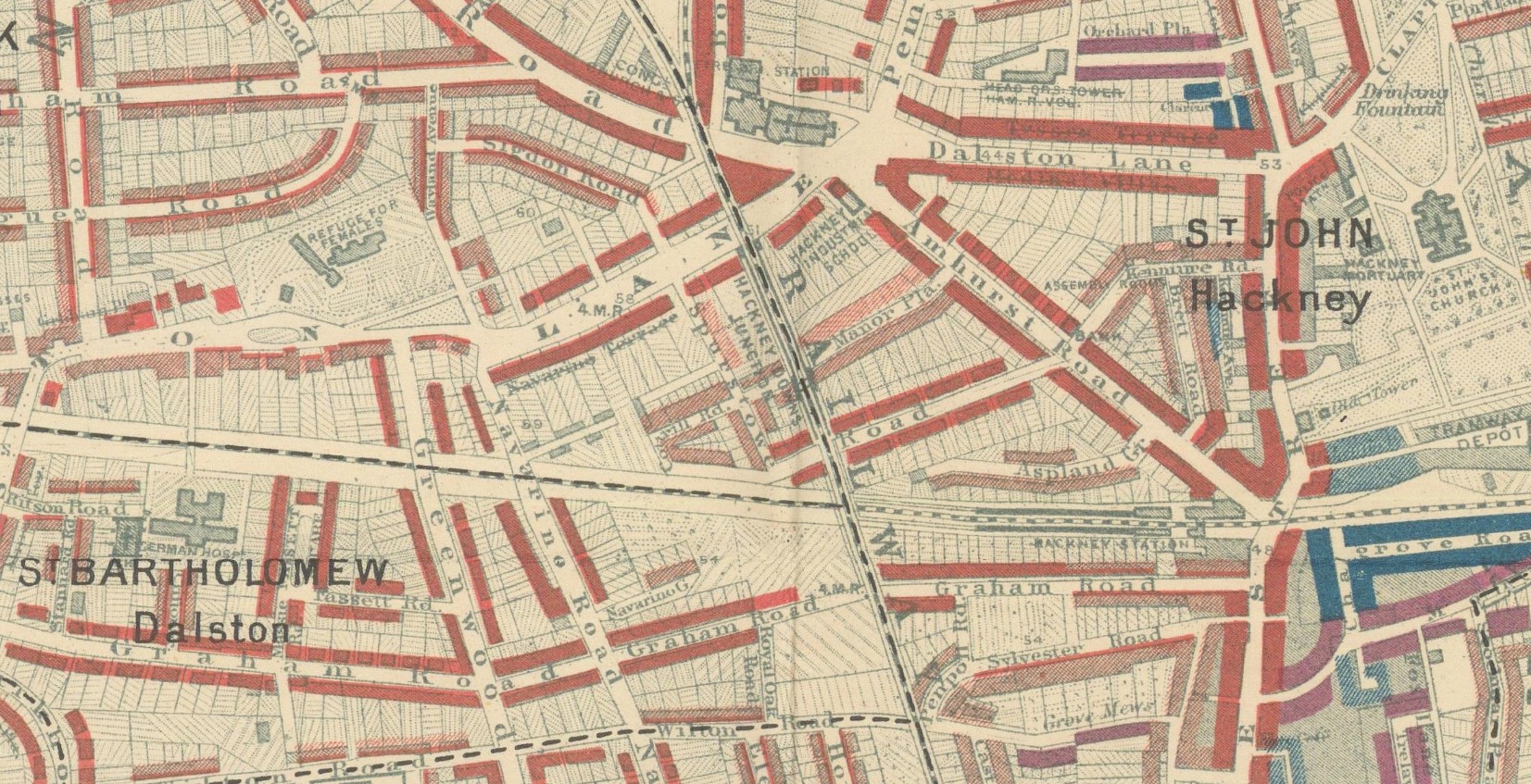
Spurstowe Road, Hackney 1902
The most prominent supporter of women’s suffrage in Hull at the time was Mary Murdoch. In 1904, Murdoch founded “The Hull Women’s Suffrage Society” which was part of Millicent Fawcett’s NUWSS, so could the postcard be from the famous doctor…
Rich and Lou Duffy-Howard