A Steam Power Station
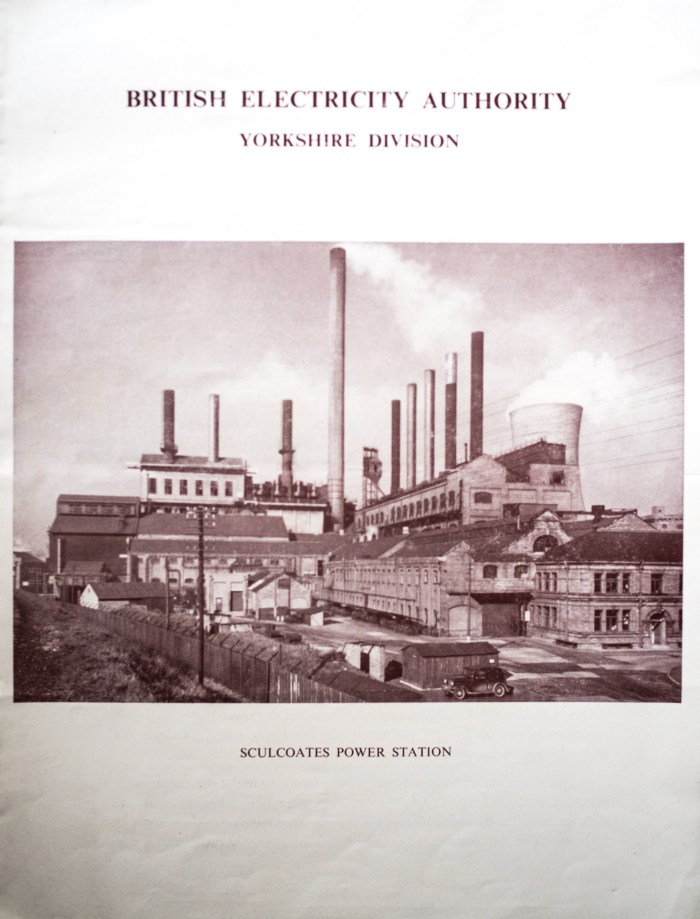
Sculcoates power station was in operation from 1898 to 1976, with the cooling tower lasting another three years before being demolished. The plant towered over Sculcoates and can be seen in many photographs of the time, looming on the horizon.
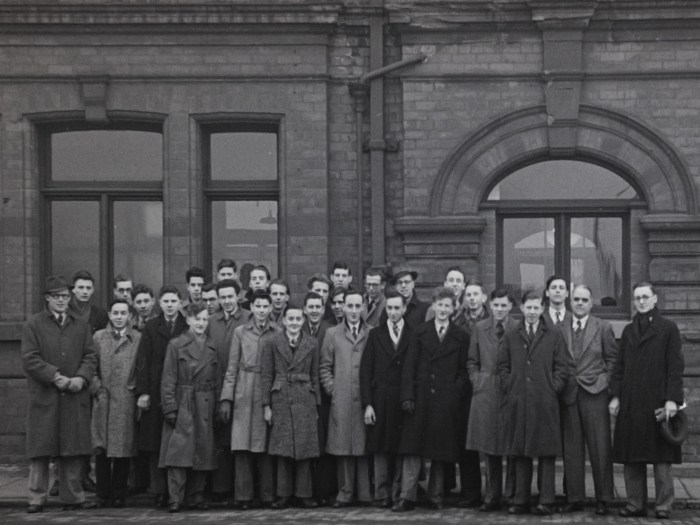
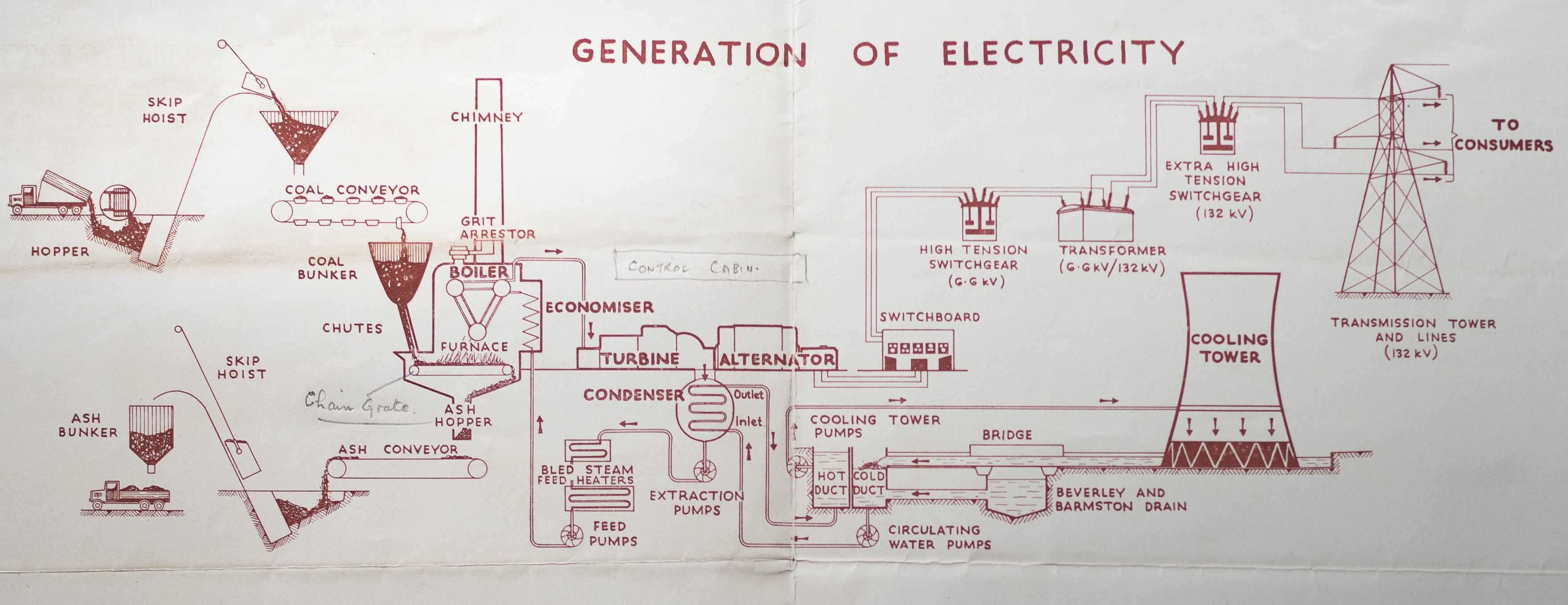
During the 1950s the plant employed about 260 staff. The photograph of the power station employees is from 1948 and along with the brochure follows the nationalisation of electricity supply in the 1947 Electricity Act. The brochure dates from the early 1950s describing the production process and when an employee, most probably a control room engineer, added the control cabin and chin grate in the furnace to the plan, along with an error recorded on 25th July 1953.
How it worked
“Coal arriving by road or rail is tipped into the receiving hopper. It is lifted by skip hoist to the coal conveyor, and discharged into the bunker over the Boiler House. It then flows down chutes on to the travelling grates of the boiler, where it is burned. When the grate leaves the furnace, the ash remaining is dumped into an ash hopper beneath the boiler. This ash is taken by conveyor belt and a skip hoist to a collecting hopper. From here it is removed by road vehicles.
By burning coal on a grate, heat is generated. This is used to make steam in the boiler. Water boils normally at 212 degs. Fahrenheit, but this steam is further heated by the hot gases from the furnace to about 800 deg. Fahr., and is known as superheated steam. The steam leaves the boiler and drives a turbine of the generator, which revolves at 3,000 revolutions per minute. On completion of this work, the steam passes into a condenser, the vacuum created giving extra energy to the turbine.
The condenser is a cylindrical body containing tubes fixed horizontally. The water for condensing the steam is pumped through these tubes. The steam gives up its heat to the colder water and becomes distilled water again. It is then re-heated by a feed-heater, and pumped back to the boiler through the economiser, for generation again into steam.
The cooling water from the condenser is returned to the cooling tower, pumped inside to a distribution system, and falls into the pond below. In doing so, air passing up the tower cools the water ready for use in the condensers.
The station is equipped with boilers of the water tube type. Steam is generated at 400 Ib. per square inch pressure. The larger boilers evaporate 180,000 Ib. of water per hour. The steam is used on seven turbines, ranging in size from 7,000 kilowatts to 30,000 kilowatts. The generators supply alternating current at 22,000 volts or 6,600 volts. This is distributed by cables and overhead lines to the consuming areas.
At this point it is reduced in voltage by transformers, for use in factories and houses.
The power of the Grid is raised in voltage to 132,000 volts at the Transforming Station nearby.
When parliament nationalised the Electrical Supply Industry, the control of generation was separated from distribution. The country was divided into fourteen Divisions, and the Power Stations in the Yorkshire Division, which includes Hull, are controlled from Leeds”.
Generating Capacity: 122,000 kilowatts
Units Generated each Year: 500,000,000
Fuel Consumed each Year: 500,000 tons
Capital Value: £2,500,000
Employees: 260
Grid connections to York and Keadby
Concrete Cooling Tower:
Height: 300 feet
Capacity: 2,500,000gals. per hour
Hand written employees note:
“Electrical clocks lose at practically any rate but can only gain by increasing cycles to 51 instead of 50.
Error at 10PM. 25-7-53 = 1 sec fast.”
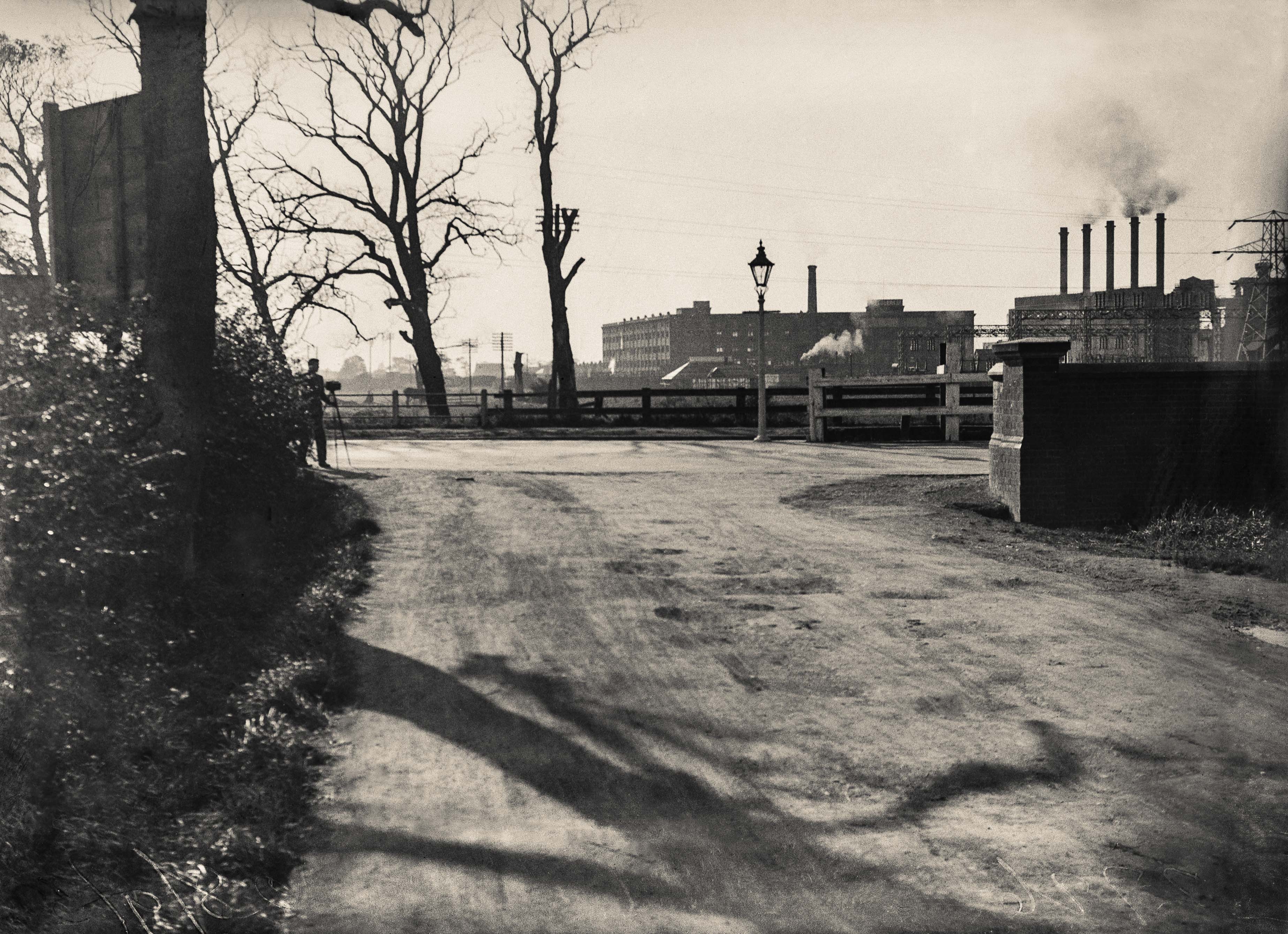
Sculcoates Power Station pre cooling tower, photographed on 28th September 1932 across Clough Road with the Beverley and Barmston drain to the right
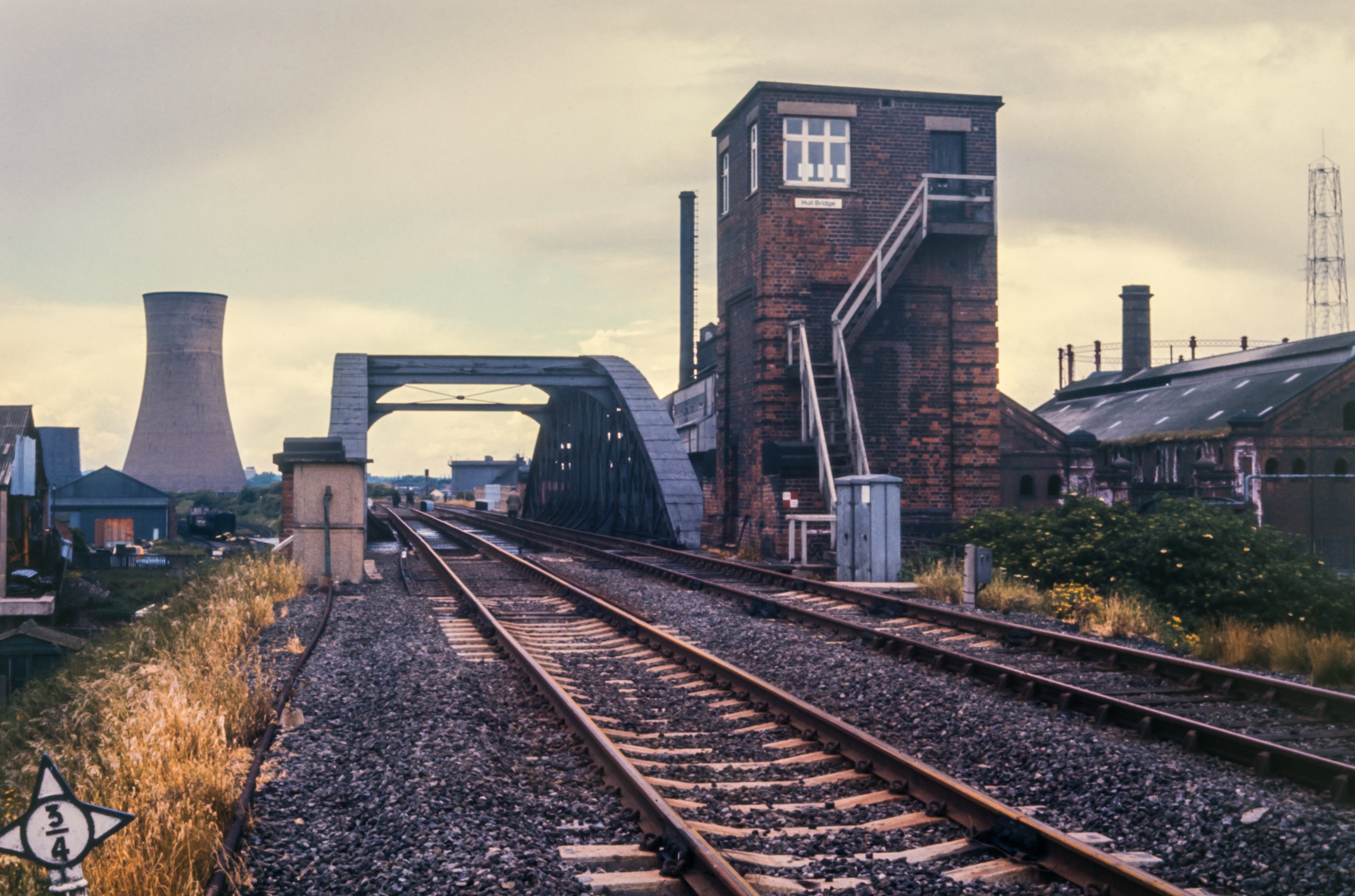
Railway Bridge over the River Hull and cooling tower early 1970s with two lines
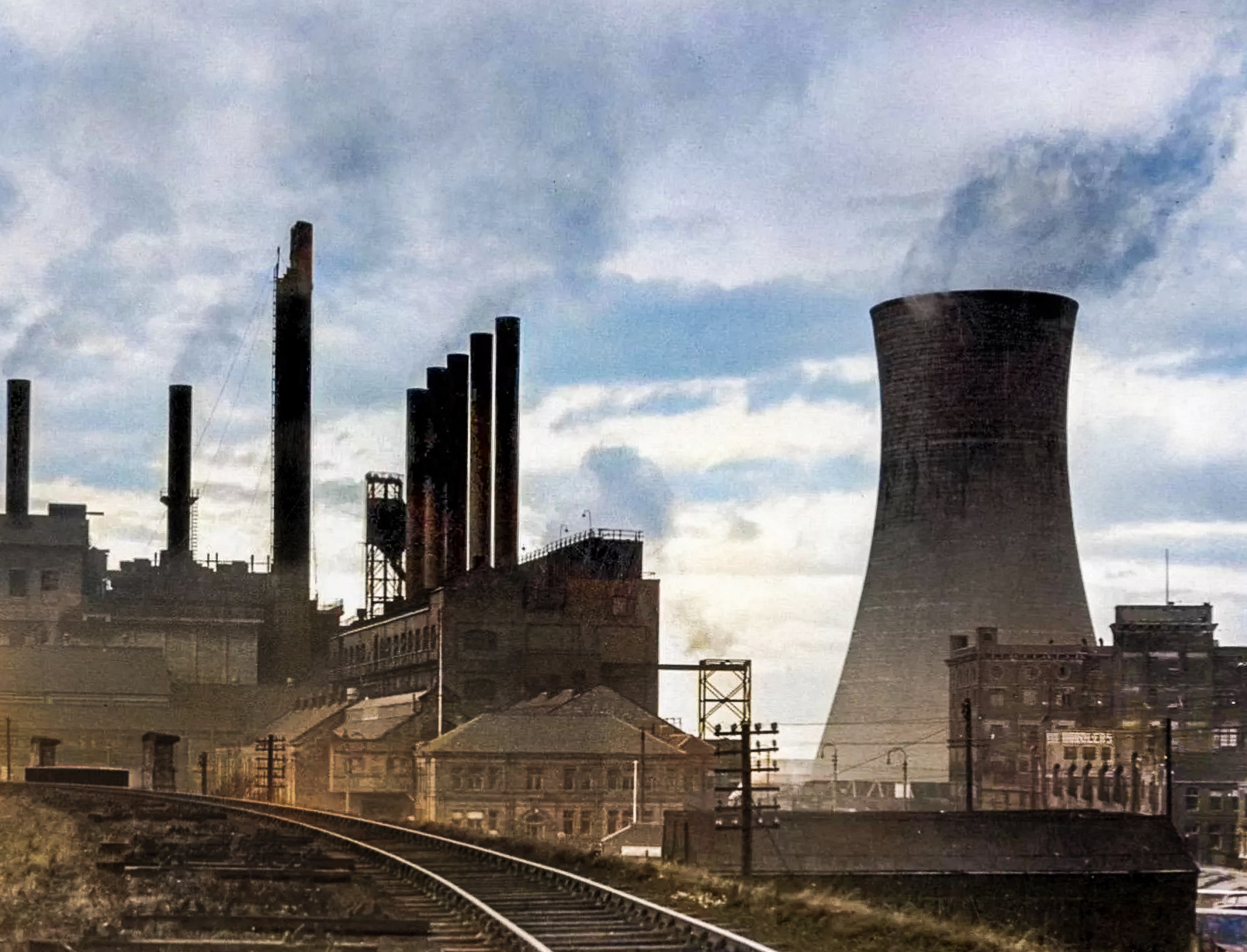
Power station from the railway, with Needlers to the right, 1970s, one line
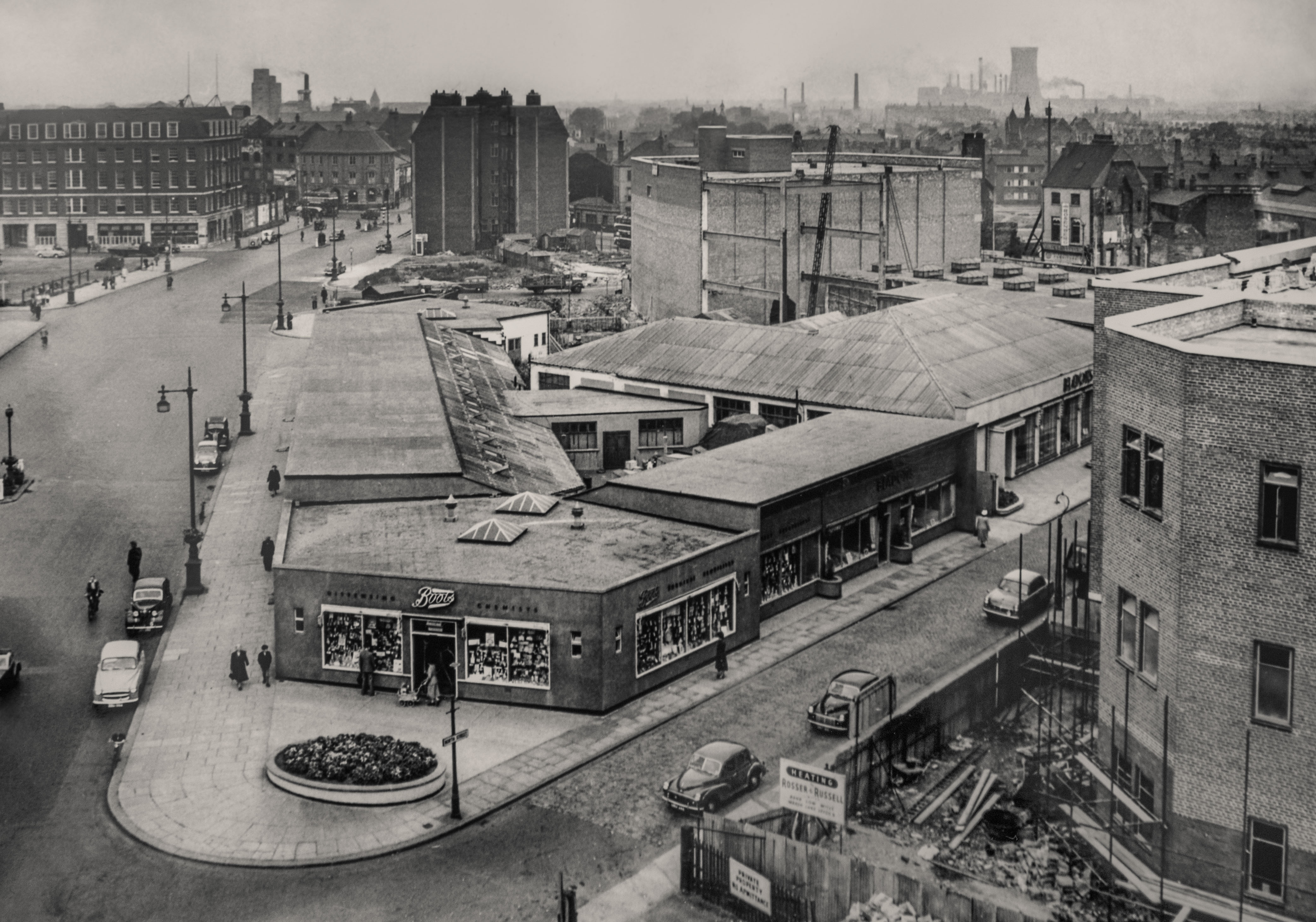
From Ferensway, Hull City Centre, with the power station top right on the horizon
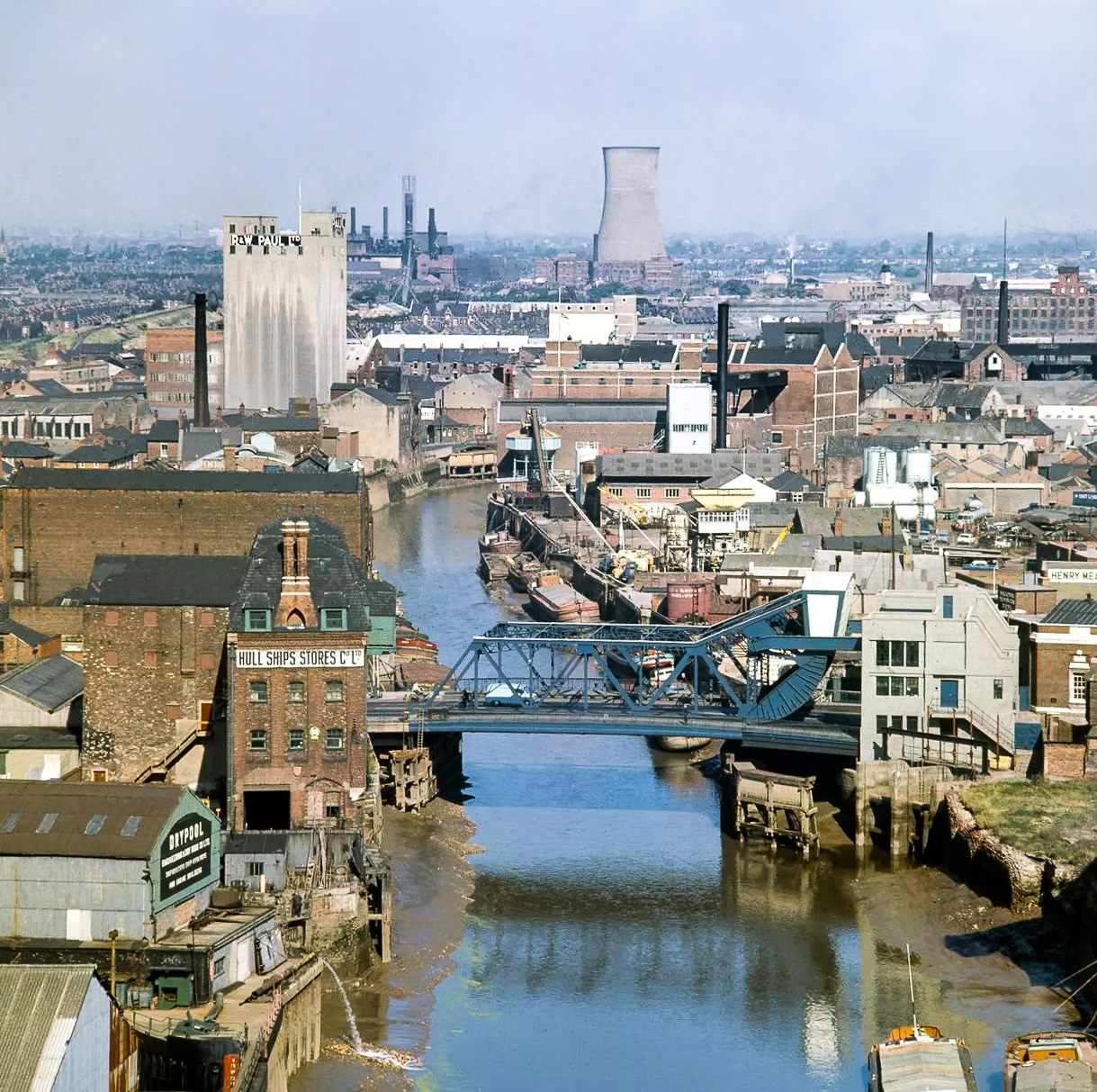
Sculcoates Power Station, the River Hull and North Bridge
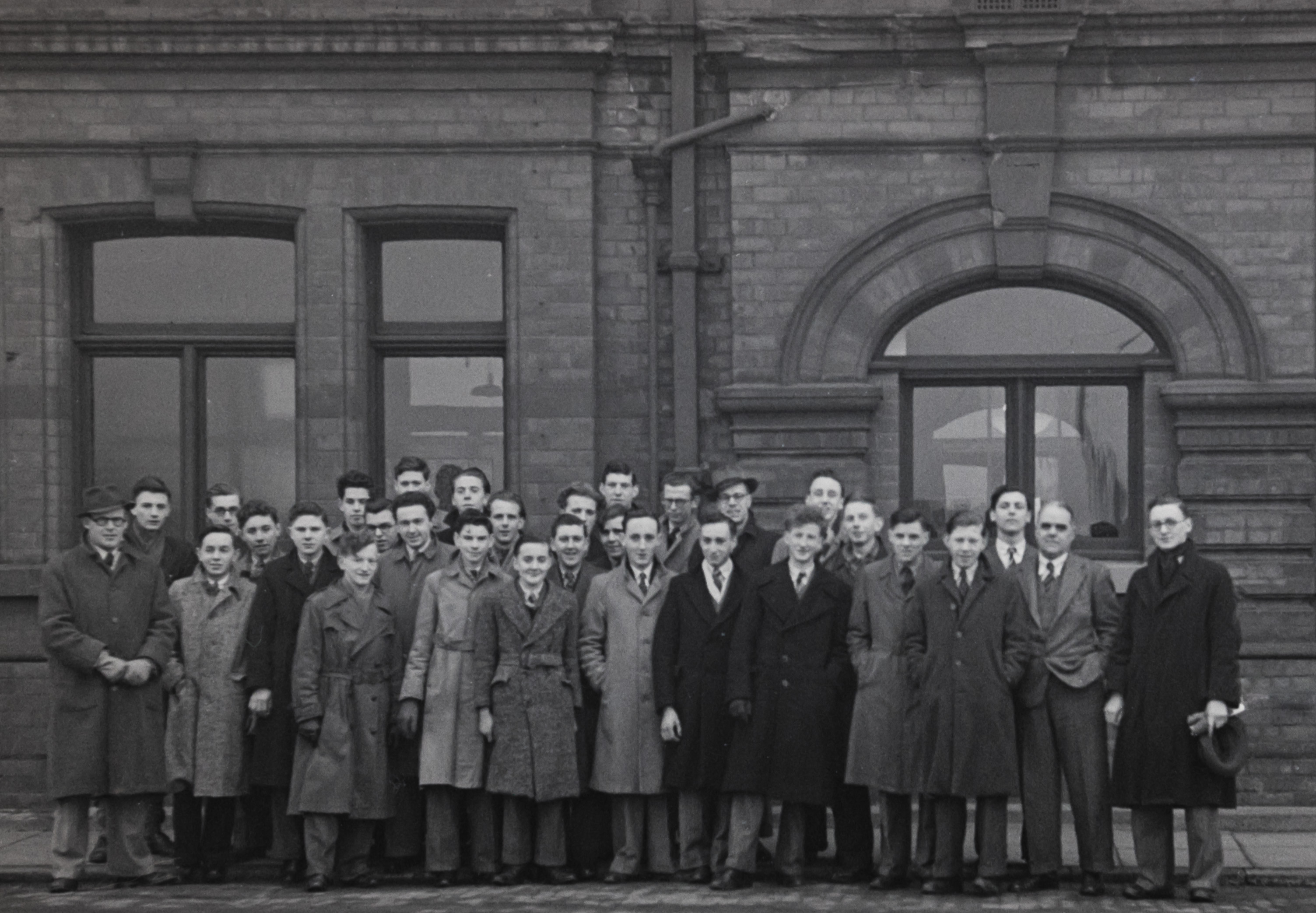
Sculcoates Power Station Employees 1948
Rich and Lou Duffy-Howard