Steven Oakden contacted us last year with his own personal story about the river. His story evocatively captures the last movements of the motor barge Swinderby in 2022. This is the first of four parts. All text and photographs copyright Steven Oakden.
Urban Exploration
My first sighting of the River Hull was on a very rainy day in 1962 when as a 7 year old with my parents we drove over a bridge across the river in our Triumph Herald. I spotted a run-down industrial scene but packed with barges moored against wooden wharves, it looked fascinating.
Over the following years I saw various photographs of the Old Harbour in various publications, but as we lived in Lancashire I never got to the river.
By 1997 I was living in East Yorkshire and on my journeys to work I would sometimes listen to BBC Radio Humberside, openings of the Drypool Bridge, (never the North Bridge) were mentioned in the traffic reports. Obviously, some largish craft were proceeding along the river. I have many interests and those, family and work took up my time. After living elsewhere for a few years, I returned to the East Riding in 2021. We live by a rural railway station served a few times a day by trains to and from Hull. I decided I just had to get down to the river to see what was left of the old buildings, I had been aware that coasters went into the Old Harbour from photographs I had seen, but a feature on the River Hull in a magazine called Archive had photographs of them much further upstream and this got me very intrigued, especially those going to the Chambers & Fargus mills.
Finally on July 5th 2022 I caught the early morning stopping train to Hull to go and see for myself what was left. I walked across Drypool Bridge on a very sunny morning and found the walkway along the east side bank.

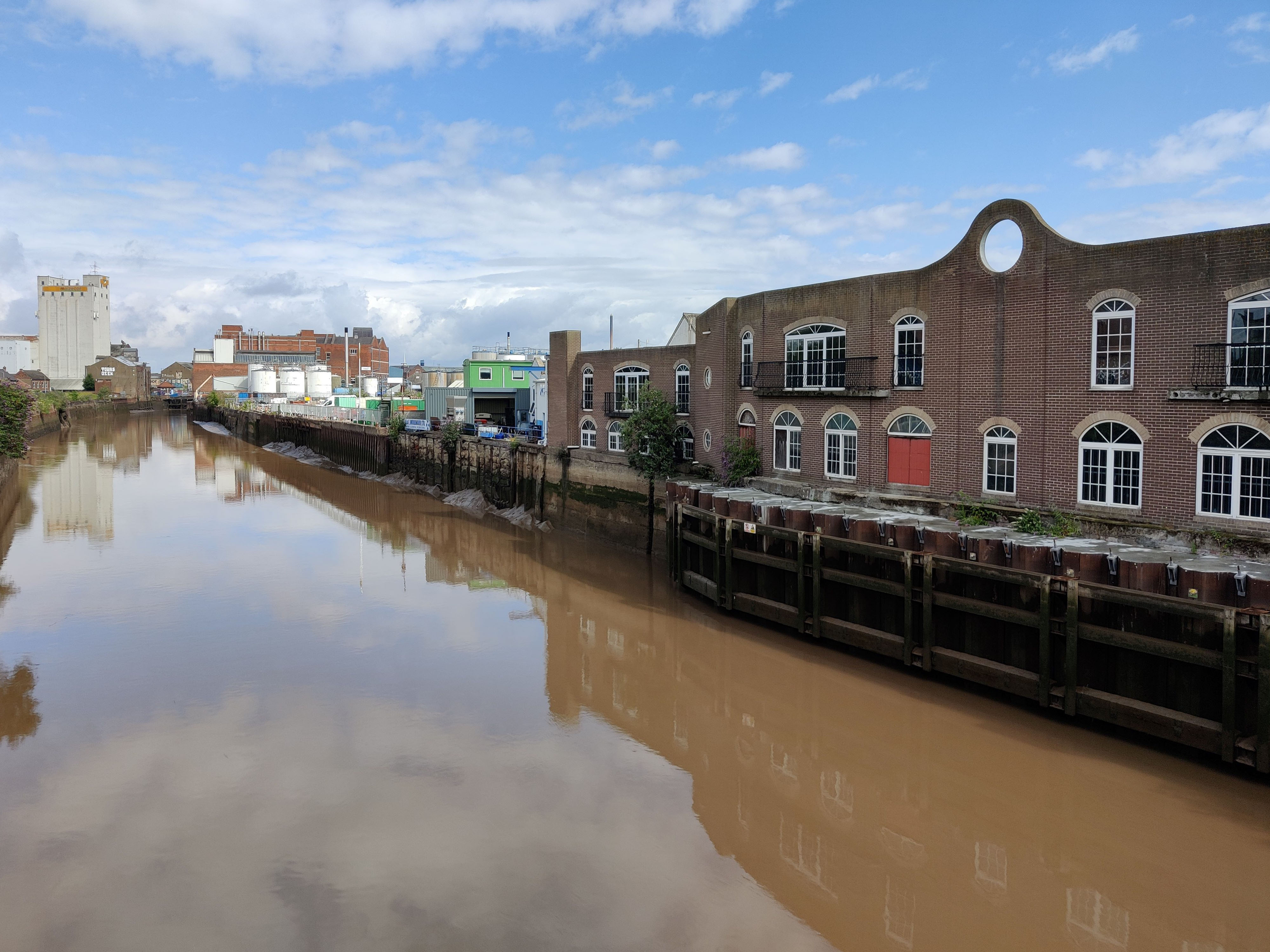
The dereliction and urban decay were all apparent. What were now open spaces where once fine brick-built buildings that stood along with shipyards and dry docks which had been a hive of activity. North Bridge house was duly photographed and then I proceeded across the bridge and up Wilcolmlee.


Car parks on both sides of the river and flat concrete areas now marked where once there had been mills. Luckily the Chambers & Fargus mill is still with us and in use by Finlay’s for their tea and coffee business and decaffeination processing.
From here on the river proceeding upstream became fascinating, quite a few old buildings were still standing, and I was surprised how the old mills were built right up to the quay heading. This was presumably because they relied on wooden hoists to unload cargo from barges and these only had a very short reach.

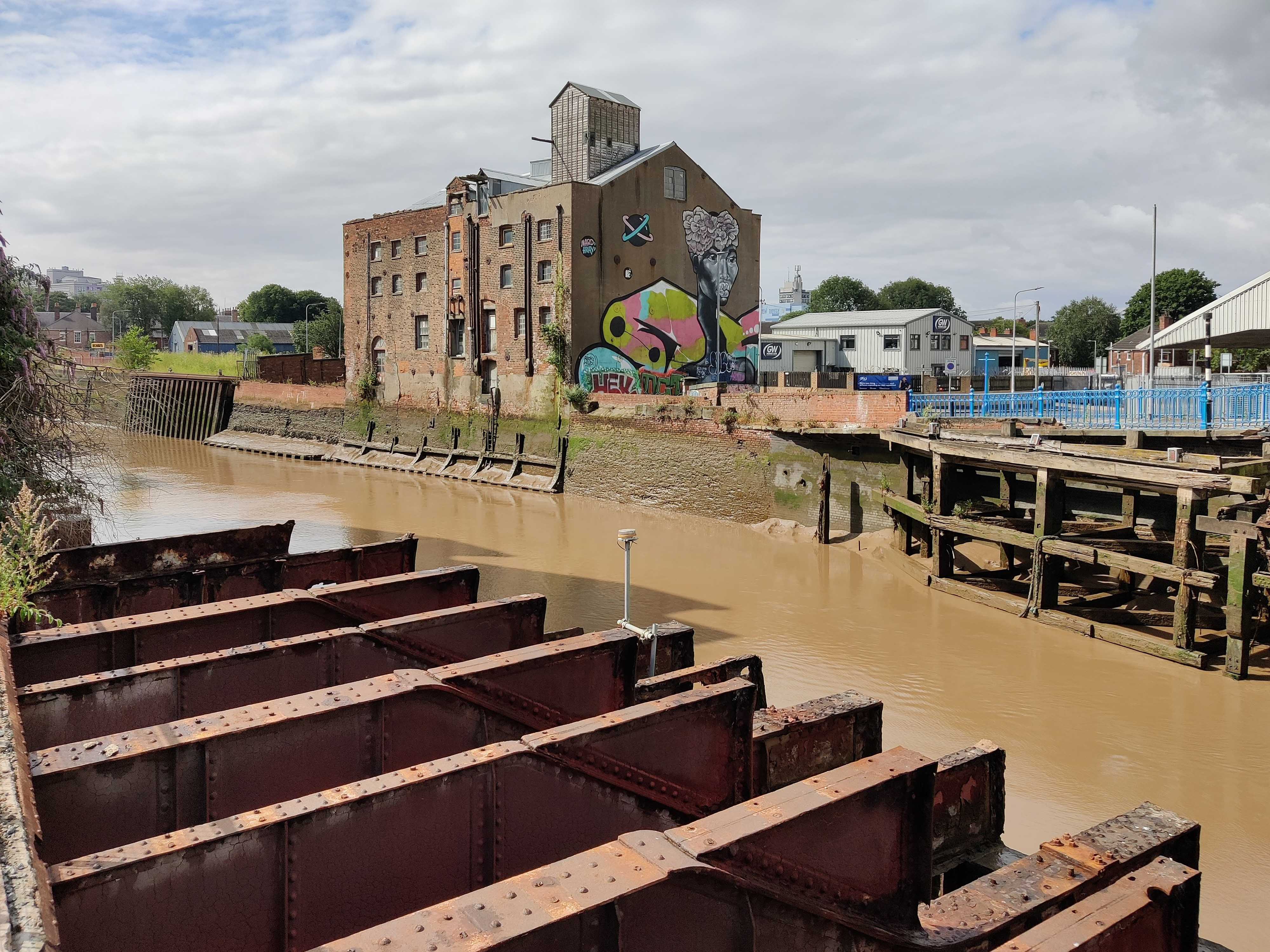
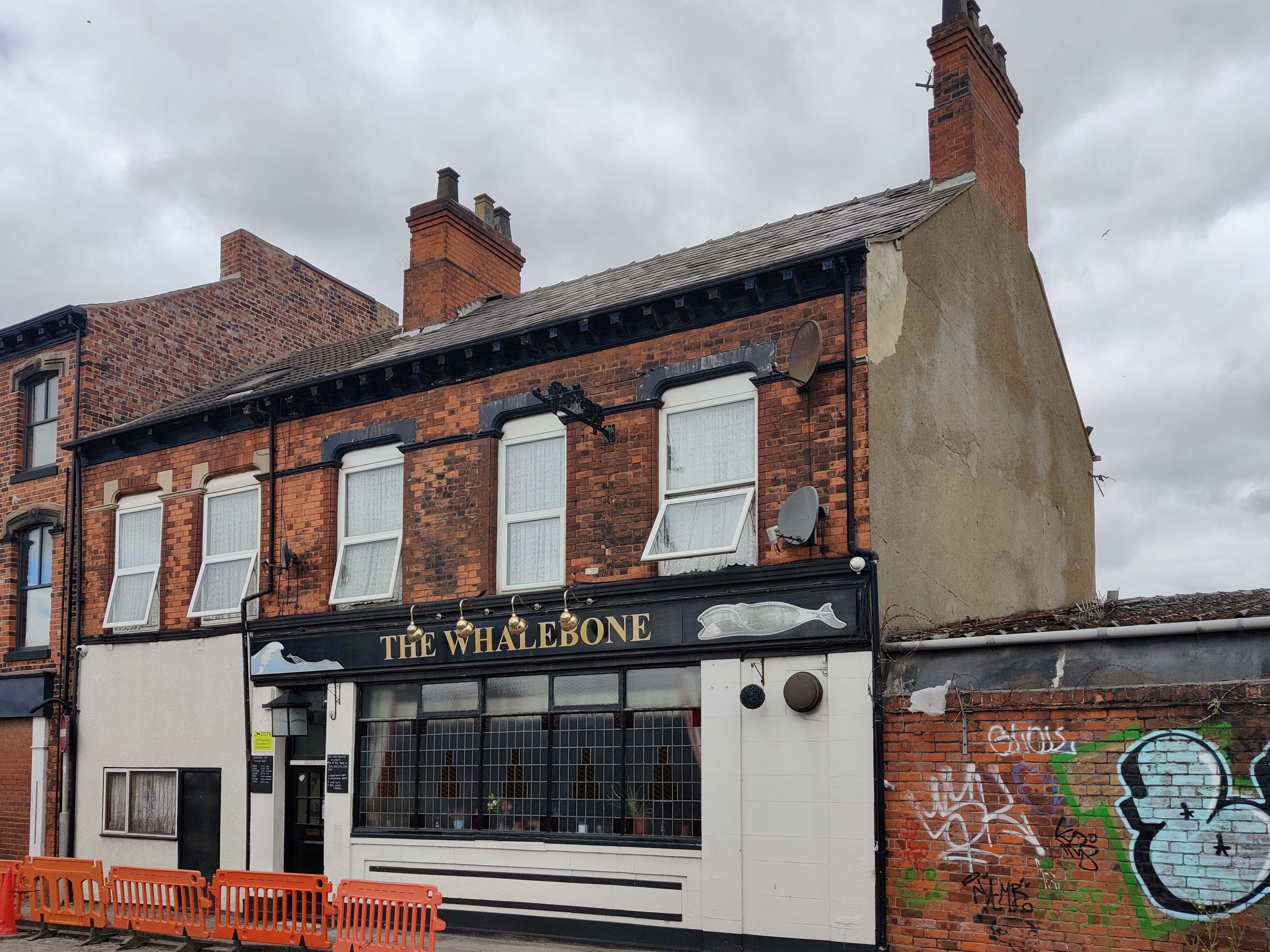
Although Scott Street Bridge had gone the wooden dolphins protecting the bridges steelwork and mountings were still there. Beyond, the river curved as it went upstream to the north. I could see more old mill buildings. A covered bridge went from one of the riverside mills into the grain silo which had been R&W Pauls. I passed the Whalebone Inn, a black and white pub that on closer inspection was a serious drinkers pub with awards and cask ales.

The walk continued at the back of riverside buildings and I was confronted with closed gates and security fencing for quite a way, a scruffy hotpotch of old and new in various states of repair and levels of activity or dereliction until I came to the next bridge, Chapman Street Bridge or Sculcoates Bridge as it is also known. Having been disappointed at the sad remains of Scott Street Bridge the state of Sculcoates Bridge with its barricades, blocks of concrete and signs forbidding all but people and bikes just added to the sense of urban decay, under investment and lack of regular maintenance. Many of the buildings on my walk up river were to do with vehicle workshops for tyres, resprays and even a vintage sports car restoration business, many of them were untidy and neglected. Above Sculcoates the riverside was lined by modern factories and buildings and the flood defence work had raised the quays to form flood barriers burying the old quays.
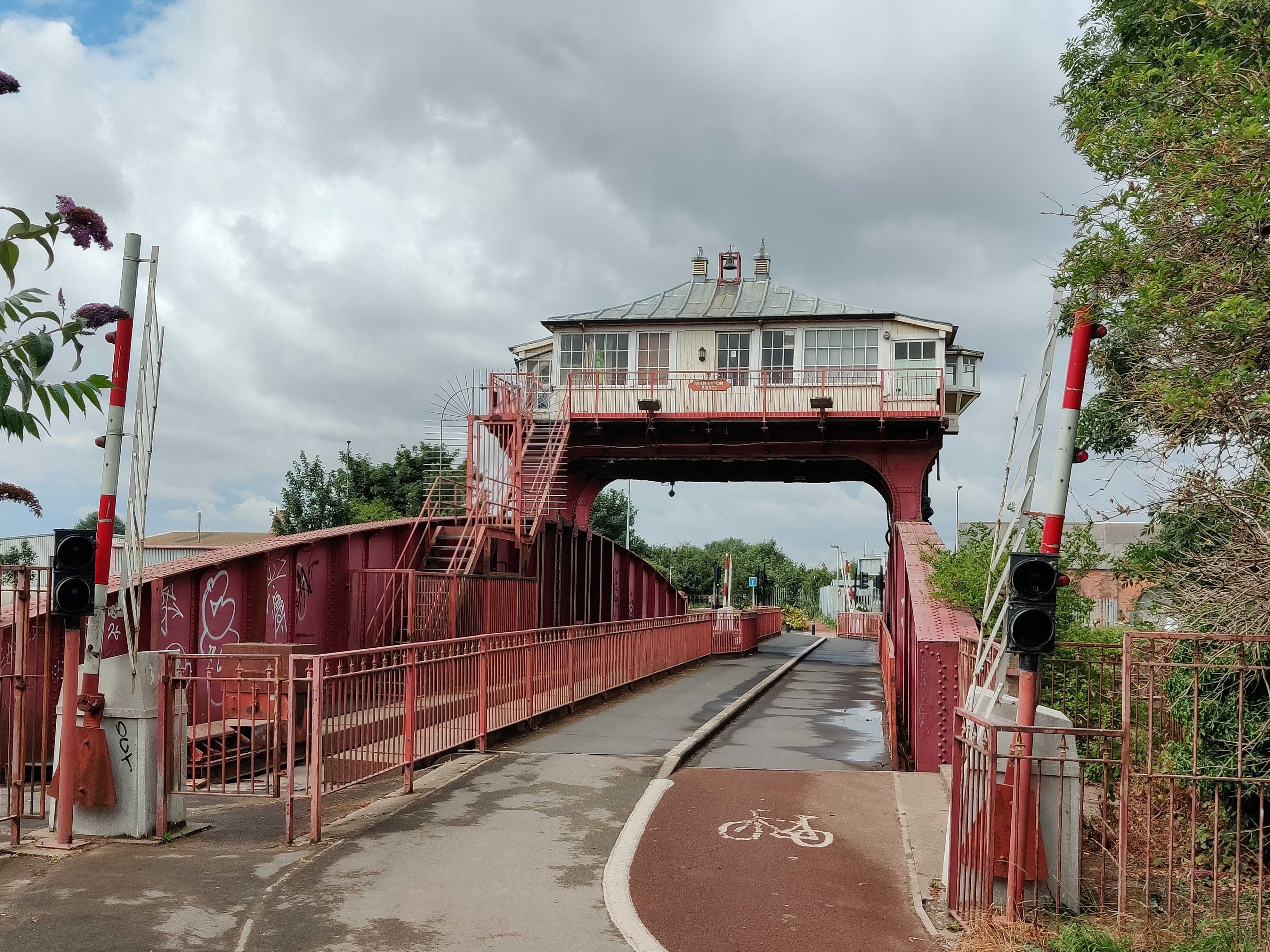
At least at Wilmington the wonderful railway bridge with its signal box operating cabin is still there. It’s a bridge that once carried passenger and freight trains but now only people and bikes and above Wilmington and past the remains of the British Extracting mill I finally spotted a barge.
As many readers of this will know I could now see the Rix Eagle. On accessing the wharf where it is moored it was obvious that this was a laid-up barge. Enquiries revealed that the Rix Eagle was a single skinned tanker and due to regulations could no longer be used for its intended purpose. Having walked as far as I wished, I decided I needed to find out who was responsible for traffic movements on the river if there was any commercial traffic left.
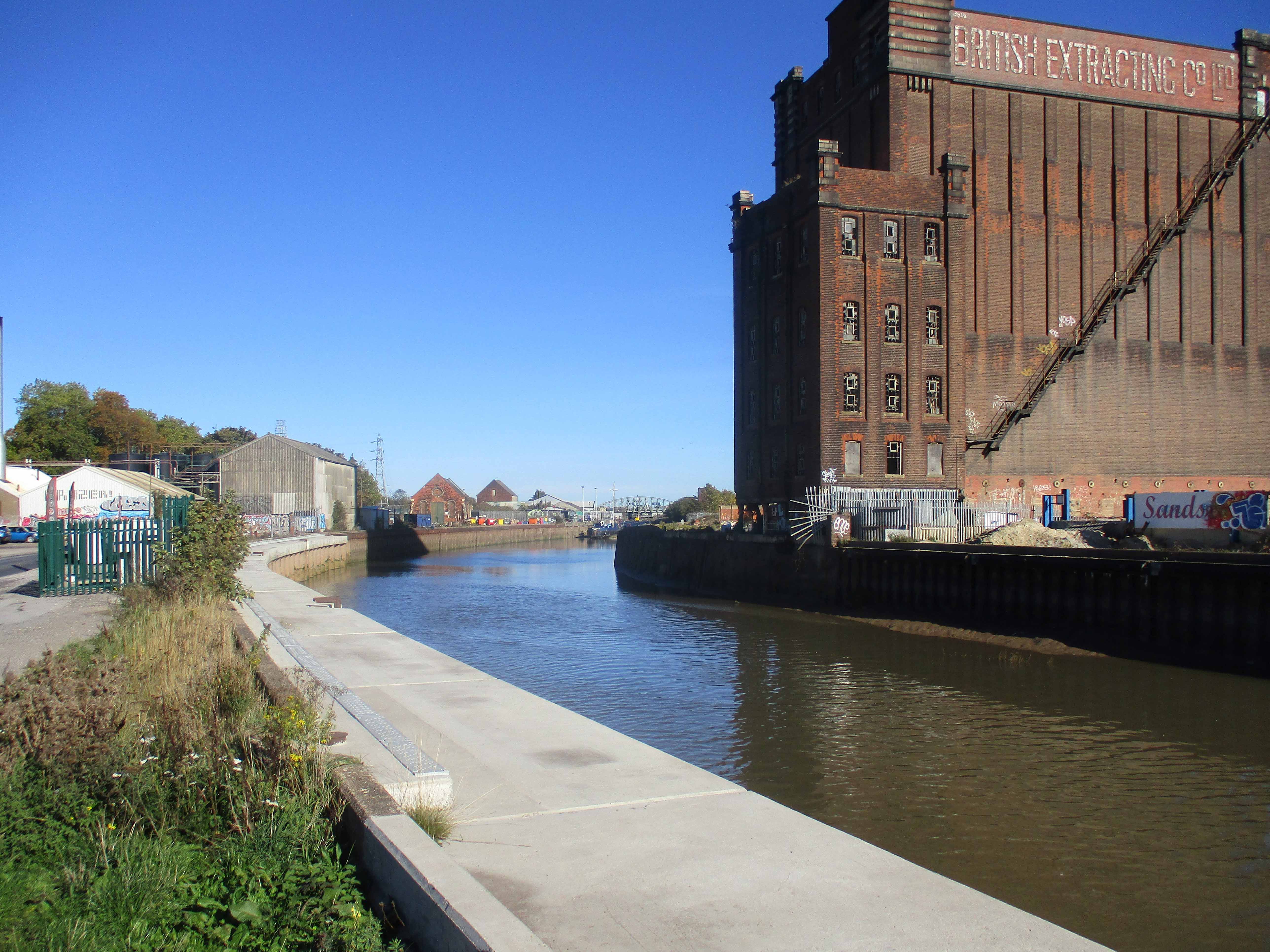
The following week I walked the river again, this time at low tide and the banks of mud made you wonder when it was last dredged and what it must be like to take a sizeable vessel along it. Despite the dereliction, whichever way you looked, the remaining industries made you realise the potential for using the river was still there. I was pleased to see that there was still a firm making propellers.
I walked up the east side of the river this time as far as Wilmington Bridge where I crossed to the west bank. I made further enquiries at Rix about the potential of any river transport by them. The gentleman I spoke to said that Rix would only use their quay if they needed to bring in fuel for storage, normally this wasn’t required. Rix Eagle which they considered was in good condition was for sale and if fuel did need to be brought in for storage one of their two other barges would do it. They had recently renewed their pipework on the quay.
I then spoke to Associated British Ports who told me that only two barges now used the river, and this occurred most if not all days. The barges used were the Swinderby and Paragon, these tripped edible oils from Cargills wharf at Stoneferry to King George dock and in the case of the Paragon to Croda’s wharf above Stoneferry. ABP told me that they were not responsible for traffic on the River Hull and that I needed to contact the harbourmaster who worked for Hull City Council. This was a surprise I hadn’t thought out that the HCC would be responsible, but on consideration it all made sense. I was given a name of the harbourmaster. The next time I was in Hull I went to the main library and being a former librarian myself I asked how I could speak to the Harbourmasters Office. I was given phone numbers and an address for their office. The address proved to be incorrect but I did manage to talk on the intercom to someone who told me that the bridge operators had an office at Drypool Bridge and that it was staffed from three hours before high water to one hour after. I then set off for the office. Outside, three men were talking and one of them was Pete Bayley the Assistant Harbourmaster. Pete was very helpful and soon I was getting lots of questions answered about the river and the operation of the Swinderby and Paragon and the times for this. I then just had to choose a day when the tide times were suitable. I discovered that evening whilst looking at a Facebook group that the traffic the barges were handling was going to stop as Cargills processing operation in Hull was ceasing at the end of the year. I had neither photographed nor seen any river traffic and it was ending before I had even got one photo of a moving barge, I really was in the last chance saloon…
All text and photographs copyright Steven Oakden.